



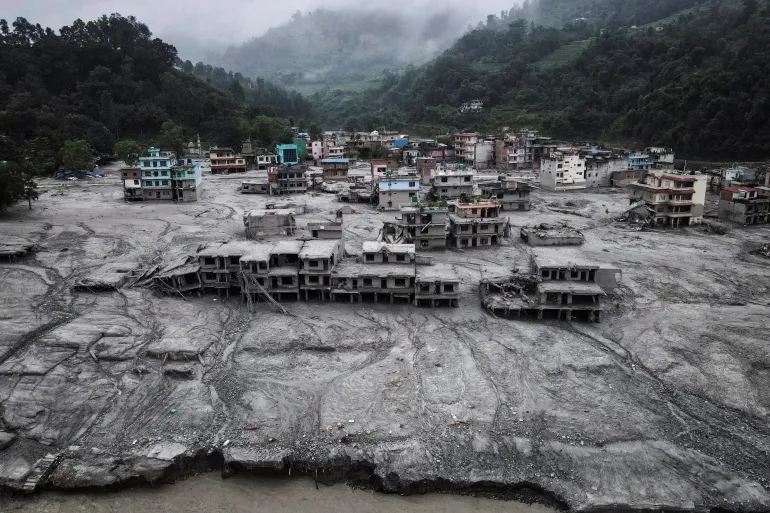
Nepal is bearing the disproportionate burden of environmental crimes perpetrated by industrialized nations and multinational fossil fuel corporations. Despite contributing 0.05% of the world’s CO2 emissions in 2024, Nepal faces severe and escalating climate vulnerability. The recent glacial lake outburst flood in late August 2026 resulted in at least 919 confirmed deaths and roughly 4,800 missing persons, with long-term ecological and socioeconomic impacts yet to be fully assessed. Damage extends across biodiversity loss, ecosystem degradation, destruction of ancestral settlements, and acute effects on community health and wellbeing.
This event constitutes a climate-induced disaster directly attributable to anthropogenic greenhouse gas emissions and the resultant rise in planetary surface temperatures and accelerated glacier ablation originating from developed nations.
Nepal confronts this catastrophe while navigating severe macroeconomic distress. The nation’s public debt reached Rs 2.975 trillion by July 16, 2026, representing 45.07 percent of Gross Domestic Product. Pandemic-related revenue contraction and currency depreciation accelerated debt accumulation. Climate disasters compel emergency borrowing for reconstruction and recovery, creating a structural debt cycle wherein new loans service existing obligations. Nepal is thus indebted to the very nations and corporations whose industrial activities precipitated the environmental crisis. This arrangement exemplifies the asymmetric distribution of climate risk and financial burden: states least responsible for atmospheric emissions bear disproportionate costs of adaptation and recovery.
The International Court of Justice’s July 2025 advisory opinion established that states violating climate obligations bear legal accountability under international law. Polluting nations possess a binding obligation to provide comprehensive compensation for climate-related damages and fund ecosystem and infrastructure restoration. Nepal possesses a legitimate legal claim for reparations.
In September, Nepal marked a stark shift for indebted global south countries with an official announcement for support not “from an angle of aid or charity” rather on the grounds of “climate justice” (Shisir Khanal, Foreign Minister). Since then, Nepal’s Ministry of Finance and Ministry of Environment have made the first request for the United Nation’s “loss and damage fund” for $20m in compensation for a “global crisis we (Nepal) did not create.”
Nepal requires debt cancellation and direct compensation for loss of life, infrastructure damage, destruction of ancestral territories, ecosystem degradation, and livelihood disruption. Loss and damage financing mechanisms must operate outside market-based instruments and loan structures that reproduce extractive relations and benefit polluting entities. Wealthy, industrialized nations and multinational fossil fuel corporations responsible for environmental degradation and cumulative carbon emissions must provide direct compensation to affected communities.
Beyond quantifiable economic losses, Nepal faces irreversible non-economic harms: destruction of ancestral settlements and sacred sites has severed intergenerational knowledge systems, territorial memory, and cultural identity. Community displacement and fragmentation have disrupted social cohesion and traditional governance structures. Survivors endure acute psychosocial trauma, collective grief, and loss of place-based identity, while traditional livelihoods rooted in specific ecological contexts have been severed, undermining community autonomy. These dimensions of harm are incommensurable with monetary compensation and constitute fundamental violations of cultural rights and dignity. Accountability frameworks must recognize non-economic loss and damage as distinct from economic compensation, centering affected communities’ voices in defining appropriate redress and restoration pathways.
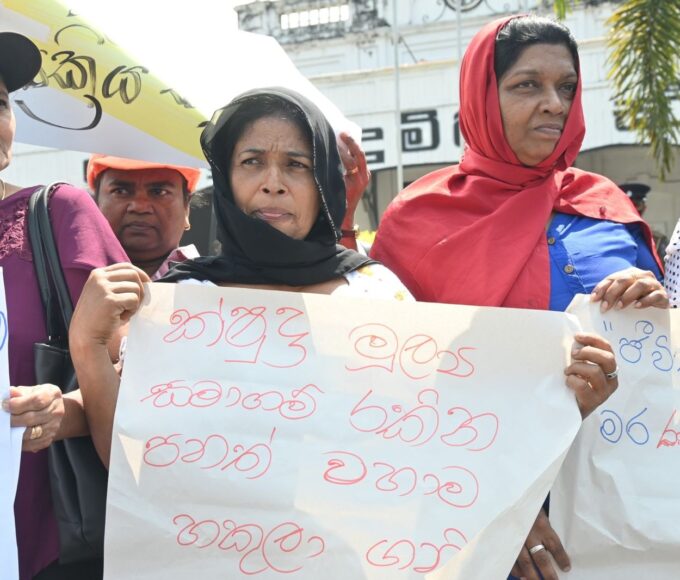
Nepali government shows strength with its call for climate justice in terms of reparations, not more debt and is exemplary for Sri Lanka that must demand reparations and debt cancellation, especially in ongoing El Nino, not accepting new loans repackaged as climate finance. With increasing climate risks for indebted countries, justice does not constitute green/blue bonds, carbon credits or market solutions for climate risk prone and indebted countries that deflect from long-term climate crimes perpetuated by market actors themselves.
Industrialized and financier nations must immediately halt fossil fuel expansion and cease extractive resource exploitation. The prevailing capitalist economic architecture, premised on wealth accumulation for privileged populations and externalizing environmental and social costs, requires fundamental restructuring toward systems prioritizing human dignity and ecological regeneration.
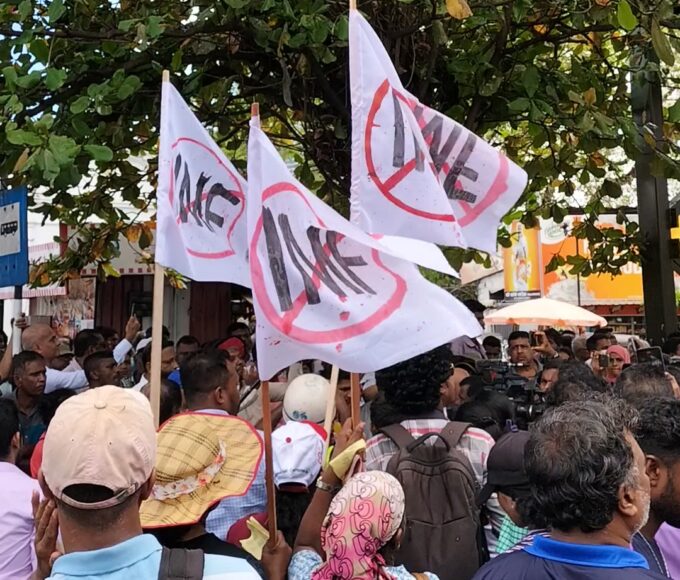
In this political moment, regional solidarity and transnational pressure are essential. South Asian nations, majority debt ridden and under IMF chokehold, must mobilize collective action in support of Nepal. Global constituencies must exert political pressure on developed nations to advance climate justice over profit accumulation.




Leave a comment